Angola Versus Tunisia Two Flags: Symbols of Heritage, Revolution, and National Identity
Flags are far more than pieces of fabric fluttering in the wind. They are condensed stories of a nation's history, struggles, aspirations, and cultural soul. When we place Angola versus Tunisia two flags side by side, we are not merely comparing colors and shapes; we are examining two distinct African narratives—one rooted in the trauma of colonization and the triumph of liberation, the other steeped in ancient Mediterranean civilization and the enduring legacy of Islamic reform. Understanding these flags offers a window into the heart of each country and reveals how visual symbolism can unite millions of people around a shared identity.
This article will take you through the design, history, and meaning of both flags, explore their similarities and differences, and show how they reflect the modern lives of Angolans and Tunisians. Whether you are a student, a traveler, or simply a curious reader, you will come away with a richer appreciation for these two powerful emblems.
Angola's Flag: A Banner of Blood, Liberation, and African Strength
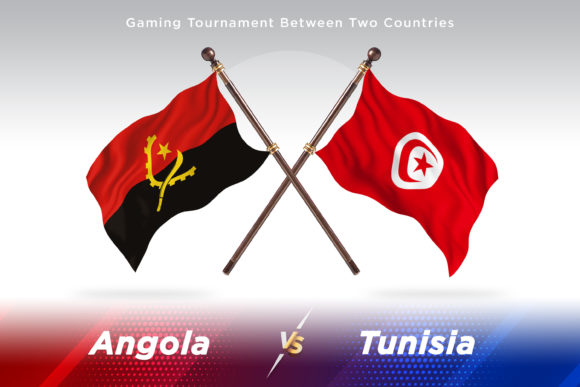
The flag of Angola was officially adopted on November 11, 1975, the day the country gained independence from Portuguese colonial rule. It was designed by the Popular Movement for the Liberation of Angola (MPLA), the political party that led the independence struggle and later governed the country. The flag is a horizontal bicolor of red and black, with a striking golden emblem in the center.
The Meaning Behind the Colors and Emblem
- Red – This color symbolizes the blood shed by Angolans during their long fight for independence and national sovereignty. It is a somber yet proud reminder of the sacrifices made by countless men and women.
- Black – Representing the African continent and the Black race, black is a powerful affirmation of Angola's identity and its place within the broader Pan-African movement.
- Golden Emblem – The central emblem is composed of a machete crossed with a gear wheel, overlaid with a star. The machete represents the peasantry and the armed struggle for liberation. The gear wheel symbolizes the industrial workforce and the nation's drive toward economic development. The star stands for international solidarity and progress. Together, these elements depict a nation built on the combined strength of its workers and farmers.
One common misunderstanding is that the yellow star is directly linked to socialist ideology, akin to Soviet or Cuban symbolism. While the MPLA did have Marxist-Leninist leanings at the time of independence, the star's primary meaning within the Angolan context is unity and forward-looking ambition, not necessarily a political doctrine. The flag was designed to speak to all Angolans, not just one faction.
Historical Context of the Angolan Flag
Angola's flag is a product of the Cold War era and the decolonization wave that swept across Africa in the mid-20th century. The flag was first hoisted as Portuguese colonial rule collapsed, but the country immediately plunged into a devastating civil war that lasted until 2002. For many Angolans, the flag is not just a symbol of independence but also a reminder of the resilience required to rebuild a nation after decades of conflict. It flies proudly today over a country rich in oil, diamonds, and cultural diversity, still striving to realize the promises of its founding.
Tunisia's Flag: A Crescent, a Star, and a Legacy of Carthage and Islam
Tunisia's flag has a much older lineage than Angola's, though its current form was officially standardized in 1831 under the rule of Al-Husayn II ibn Mahmud, the Bey of Tunis. It is a red field with a white circle in the center, containing a red crescent and a five-pointed star. This design is instantly recognizable as part of a broader family of flags used across the Muslim world, but Tunisia's version has unique historical roots.
The Deeper Symbolism of Tunisia's Flag
- Red Background – The red color is historically associated with the Ottoman Empire, which exerted influence over North Africa for centuries. More deeply, red also evokes the blood of Tunisian martyrs who fought against colonial occupation, particularly the French, who controlled Tunisia from 1881 to 1956.
- White Circle – The white central disk symbolizes peace, purity, and the bright future that Tunisia aspires to achieve. It also serves as a visual anchor for the crescent and star, making them stand out clearly.
- Crescent and Star – These are classic symbols of Islam, representing faith, guidance, and the celestial bodies that have guided travelers and scholars for centuries. In the Tunisian context, the crescent also refers to the historic Ottoman connection, while the star is sometimes interpreted as the five pillars of Islam. However, it is important to note that the crescent and star were used in the region long before Islam—they appeared on Punic and Roman artifacts from ancient Carthage, which was located near modern Tunis. So this flag carries a double heritage: ancient North African and Islamic.
A Flag That Survived Colonialism
Unlike many African nations that adopted completely new flags after independence, Tunisia kept its pre-colonial banner. When the French protectorate ended in 1956, the flag remained unchanged—a powerful statement of cultural continuity. Tunisians are deeply proud of this unbroken symbol, which connects them to their pre-colonial past and to the broader Arab and Muslim world. The flag is flown with passion during national holidays, football matches, and daily life, and it appears everywhere from government buildings to seaside cafés.
Direct Comparison: Angola Versus Tunisia Two Flags
When we compare these two flags, the differences are immediately visible, but the similarities are equally instructive.
Visual and Design Contrasts
The Angolan flag uses a bold two-color scheme of red and black with a detailed industrial and agricultural emblem. It is a modern, revolutionary design—intentionally breaking from colonial patterns and asserting a new African identity. The Tunisian flag, by contrast, uses a single red field with a central circular emblem, a design that echoes the Ottoman tradition and Islamic symbolism. It is simpler, more classical, and immediately connects Tunisia to a broader historical and religious identity.
| Feature | Angola | Tunisia |
|---|---|---|
| Adoption Year | 1975 | 1831 (standardized) |
| Primary Colors | Red, Black, Gold | Red, White |
| Central Symbol | Machete, Gear, Star | Crescent and Star |
| Design Tradition | Revolutionary / Pan-African | Islamic / Ottoman |
| Number of Colors | Three | Two |
Shared Values: Struggle and Sovereignty
Despite these visual differences, both flags share a deep commitment to national sovereignty and the memory of struggle. Angola's flag commemorates the fight against Portuguese colonialism and internal conflict. Tunisia's flag remembers the resistance against French occupation and also honors the broader struggle for Arab and Muslim identity. Both flags use red to symbolize sacrifice and blood—a common thread that unites many national flags around the world. Both also place a central emblem that carries the weight of the nation's foundational story: for Angola, it is the union of workers and peasants; for Tunisia, it is faith and heritage.
Practical Relevance: How These Flags Fit Into Modern Life
Flags are not static museum pieces; they are living symbols that evolve in meaning with each generation. In Angola, the flag appears during the vibrant celebrations of Independence Day (November 11) and at cultural festivals like the Luanda International Jazz Festival. It is also increasingly used by the country's young entrepreneurs and artists as a badge of national pride as Angola diversifies its economy beyond oil. In schools, children learn the flag's symbolism as part of civic education, reinforcing a sense of national belonging in a country that is still healing from civil war.
In Tunisia, the flag is a constant presence in daily life. It waves from rooftops in the medina of Tunis, decorates bakery windows, and is painted on the faces of fans during the Carthage Film Festival. Following the 2011 Jasmine Revolution, the flag took on new meaning as a symbol of democratic aspirations and civic freedom. Tunisians often display the flag not just out of habit but as a deliberate expression of their identity in a rapidly changing region. For both countries, the flag is a tool for national storytelling—a way to remind citizens and the world who they are and what they stand for.
Clearing Up Common Assumptions
Many people assume that all African flags are either Pan-African (red, black, green) or derived from former colonial powers. Angola breaks this mold by using a distinctly socialist-inspired design, though it has now been embraced by all political stripes. Tunisia, on the other hand, is often grouped with other Arab states, but its flag actually predates the modern Arab nationalism movement and has strong roots in North African antiquity. Understanding these nuances helps us avoid oversimplifying the rich diversity of African and Arab symbolism.
Another assumption is that the crescent and star on Tunisia's flag are purely Islamic. While they are certainly used as Islamic symbols today, their origins in Tunisia go back to the Carthaginian goddess Tanit and the Roman colony of Africa Proconsularis. This layered history gives the Tunisian flag a depth that surprises many people—it is not just a religious marker but a continuity of civilization.
Why Understanding Both Flags Matters Today
In a globalized world, flags are often the first thing we learn about a country. They are used in international sports, diplomacy, travel, and digital media. By understanding the stories behind Angola's revolutionary black-and-red banner and Tunisia's ancient crescent-and-star emblem, we become more informed global citizens. We learn that national identity is never simple—it is woven from history, war, faith, labor, and hope.
For businesses and educators working with African or North African partners, respecting and understanding these symbols is a small but meaningful way to build cultural competence. For travelers, recognizing what a flag stands for can transform a trip from a surface-level visit into a deeper engagement with a nation's soul. And for anyone interested in how people define themselves, these two flags offer a fascinating case study in contrast and commonality.
Conclusion: Two Flags, One Continent, Infinite Stories
When we hold up Angola versus Tunisia two flags, we are holding up two proud African nations with very different journeys. Angola's flag speaks of liberation from colonialism, the dignity of labor, and the unity of the Black diaspora. Tunisia's flag speaks of ancient Mediterranean roots, Islamic faith, and a quiet resilience that has outlasted empires. Both flags are red, both carry central emblems, and both are beloved by their people with fierce pride.
The next time you see these flags at an international event or in the news, you will understand the depth behind the fabric. You will see not just colors but the blood, hope, and vision of two remarkable countries. And you will appreciate, perhaps more than ever, how a simple design can carry the weight of a nation's entire story.