Angola Versus Ukraine Two Flags: What Each Design Reveals About National Identity
Flags are not merely pieces of cloth. They are distilled stories—compressed into shapes, colours, and symbols that carry generations of memory, struggle, and hope. When we place the flag of Angola next to the flag of Ukraine, the visual contrast is immediate. One is bold, aggressive, and revolutionary. The other is serene, binary, and deeply rooted in the land. Yet both speak to something profound about the nations they represent. Examining Angola versus Ukraine two flags reveals not only different design philosophies but also the very different historical paths these countries have walked.
Understanding what a flag communicates requires looking beyond aesthetics. The Angolan flag, adopted at independence in 1975, draws heavily from the iconography of liberation movements. The Ukrainian flag, with its simple horizontal bands of blue and yellow, has roots stretching back centuries but was officially adopted in 1992 after the collapse of the Soviet Union. Each flag answers a fundamental question: what does a people choose to show the world about themselves?
The Angolan Flag: Revolution, Labour, and Agriculture in One Emblem
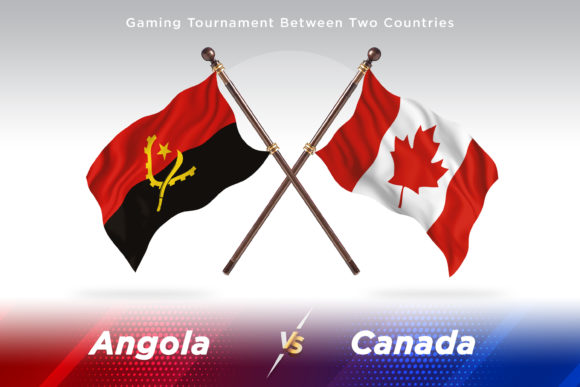
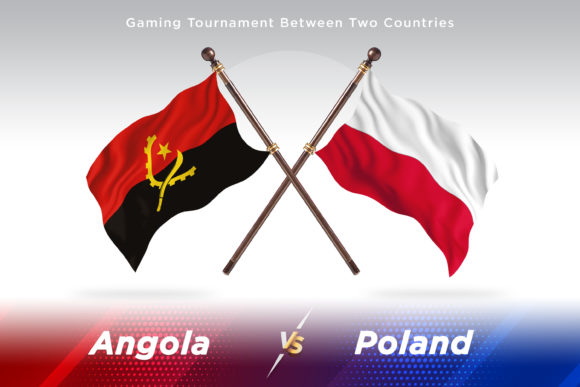
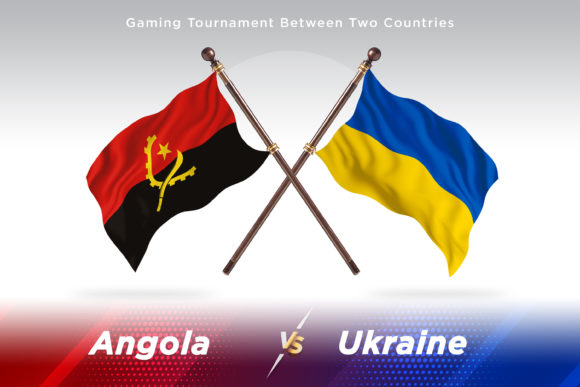
The flag of Angola consists of two horizontal stripes—red on top and black on the bottom—with a central emblem featuring a cogwheel, a machete, and a star. This is not a subtle design. It was created by the Popular Movement for the Liberation of Angola (MPLA), the movement that led the country to independence from Portuguese colonial rule. The red stripe symbolises the bloodshed during the long struggle for freedom. The black stands for the African continent and the people of Angola. The cogwheel and machete represent industry and agriculture, the twin pillars of the economy that the new nation hoped to build. The yellow star, placed above the crossed tools, symbolises international solidarity and progress.
What is striking about the Angolan flag when comparing Angola versus Ukraine two flags is the density of meaning packed into a single design. Every element carries ideological weight. The machete is not just a farming tool—it is a weapon of liberation used by rural fighters. The cogwheel evokes industrialisation and the working class. Together, they form a visual manifesto of a nation born from armed struggle and socialist ideals.
However, the flag has not been without controversy. Over the years, there have been discussions about whether the current design remains appropriate for a modern, democratic Angola. Some critics argue that the flag is too closely tied to a single political party—the MPLA—rather than representing the entire nation. Others believe the revolutionary symbolism no longer reflects Angola's current ambitions as an emerging economy with a young population. Despite this, the flag remains a powerful identifier for Angolans, especially during major events like independence day celebrations or international sporting competitions.
Colour Choices and Their Psychological Impact
The red and black palette is intentionally stark. Red evokes urgency, sacrifice, and passion. Black grounds the design in African identity. Together, they create a flag that is hard to ignore. In practical terms, this colour scheme is highly distinctive. When you see the Angolan flag in a crowd of international flags, it stands out precisely because it avoids the more common blue, white, and red combinations found in many Western flags. This visual distinctiveness is a practical benefit for Angola in diplomatic settings, branding, and tourism promotion.
The Ukrainian Flag: Sky, Wheat, and a Centuries-Old Palette
Now consider the Ukrainian flag. Two horizontal bands: blue above, yellow below. That is all. There is no emblem, no star, no crossed tools. Yet this simplicity is deceptive. The blue represents the sky over Ukraine, and the yellow represents the vast wheat fields that have made the country known as the "breadbasket of Europe." This is a flag that speaks to geography and agriculture rather than revolution or ideology.
Tracing the origins of the blue-and-yellow combination takes you back to the medieval Kingdom of Galicia–Volhynia and later to the Cossack Hetmanate. The modern flag was officially adopted in 1918 during the short-lived Ukrainian People's Republic, then banned during the Soviet era, and finally reinstated in 1992 after the dissolution of the USSR. For Ukrainians, flying the blue-and-yellow flag was an act of defiance during decades of Soviet rule. Today, it has become an even more potent symbol of national resistance, especially since the 2014 Revolution of Dignity and the full-scale invasion that began in 2022.
When examining Angola versus Ukraine two flags, the Ukrainian design is a lesson in restraint. It relies on the emotional resonance of natural elements rather than complex iconography. The blue is often described as a soft, almost azure tone, while the yellow is a warm, golden shade that recalls ripe grain. This colour harmony makes the flag instantly recognisable and relatively easy to reproduce—a practical advantage for manufacturers, event organisers, and digital designers.
Why Simplicity Works in Modern Flag Design
Vexillologists—people who study flags—often emphasise that the best flags are simple enough for a child to draw from memory. The Ukrainian flag passes this test with ease. In an age of digital screens, where flags appear as small icons on news sites, social media avatars, and video feeds, a simple two-colour design scales beautifully. The Angolan flag, while memorable, is harder to reproduce accurately at small sizes due to the intricate central emblem. This difference matters in practical applications, from emoji design to merchandise production to military identification.
Comparing Symbolism: Liberation Versus Continuity
One of the most revealing aspects of the Angola versus Ukraine two flags comparison is what each flag chooses to emphasise. The Angolan flag is forward-looking in a revolutionary sense—it was designed to announce a new era after colonialism. It speaks to what the nation wanted to become: industrialised, united, and socialist. The Ukrainian flag, by contrast, looks to the land itself. It claims continuity with the past, asserting that Ukraine existed as a distinct nation long before modern borders were drawn.
This difference reflects the very different contexts of independence. Angola gained independence after a protracted armed struggle against Portugal, followed by a devastating civil war. The flag needed to rally people around a common cause and legitimise the new ruling party. Ukraine's flag re-emerged after the fall of the Soviet Union, a moment when many former Soviet republics were reclaiming pre-Soviet national symbols. For Ukrainians, the blue-and-yellow flag was not a new invention but a restoration of something that had been suppressed.
In practical terms, considering Angola versus Ukraine two flags helps us understand how nations use flags to communicate with both domestic and international audiences. A flag is a diplomatic tool. When the Ukrainian flag is flown at protests around the world, it communicates a clear message of resistance and identity. When the Angolan flag is raised at African Union summits, it signals a nation that is asserting its place on the continent after decades of conflict.
Modern Usage: Flags in Daily Life and Global Media
Both flags have seen a surge in visibility in recent years, though for very different reasons. The Ukrainian flag has become one of the most widely recognised national symbols in the world due to the ongoing war. It appears on banners at solidarity rallies, on social media profile pictures, on clothing, and even on public buildings in cities from Warsaw to Washington. This visibility has transformed the flag into a global shorthand for resilience and the defence of sovereignty.
The Angolan flag, while less ubiquitous internationally, has gained prominence as Angola positions itself as a major oil producer and a regional power in Southern Africa. The flag is prominently displayed at international energy conferences, at African Cup of Nations football matches, and on Angolan airline tails. For travellers and business professionals, recognising the flag is a small but meaningful way to show awareness of the country's growing economic influence.
Digital Design Considerations for Both Flags
From a web design and digital media perspective, the Angola versus Ukraine two flags comparison offers practical lessons. The Ukrainian flag's two-colour simplicity means it renders cleanly on low-resolution screens, in favicon size, and in black-and-white contexts. The Angolan flag's emblem, with its fine details and yellow star, can become muddy when scaled down. Designers working on international content should be aware that flag clarity affects user experience—especially on mobile devices where screen space is limited.
For event organisers, printing considerations also differ. Producing large bunting or banners of the Ukrainian flag is straightforward and cost-effective due to the lack of intricate details. The Angolan flag typically requires more precise printing to ensure the cogwheel and machete are clearly visible, especially at scale. These are small practical points, but they matter for organisations that regularly display multiple national flags.
What the Flags Tell Us About National Priorities
One can also read broader national priorities from these flags. Angola's emphasis on industry and agriculture in its emblem reflects the challenges of a post-colonial economy trying to diversify away from oil dependency. The flag literally depicts the tools needed to build a self-sufficient nation. Ukraine's flag, with its reference to sky and wheat, highlights the centrality of agriculture to the Ukrainian economy and identity—Ukraine is one of the world's largest exporters of sunflower oil, corn, and wheat. The flag quietly asserts that the land is the source of the nation's wealth and character.
In discussions of Angola versus Ukraine two flags, it is worth noting that both countries have experienced profound trauma—Angola through a brutal civil war that lasted until 2002, and Ukraine through war and Soviet repression. In both cases, the flag has served as a rallying point. During Angola's civil war, the flag represented a vision of a united country, even as factions fought for control. During Ukraine's current war, the flag has become a symbol of defiance and hope, emblazoned on military vehicles, worn by soldiers, and raised in liberated towns.
Recommendations for Learning More About National Symbols
For anyone interested in vexillology or international affairs, studying flags like those of Angola and Ukraine is a gateway to deeper cultural and historical understanding. Visiting national museums in either country offers context. In Angola, the Museum of the Armed Forces in Luanda displays the original flag used during the independence struggle. In Ukraine, the National Museum of the History of Ukraine in Kyiv traces the evolution of the blue-and-yellow banner through centuries of foreign domination.
For educators, using the Angola versus Ukraine two flags comparison is an excellent way to teach students about symbolism, colonialism, national identity, and the role of visual communication in politics. The two flags offer a clear contrast that sparks discussion: why would one nation choose a complex emblematic design while another opts for pure colour fields? What does each choice say about the country's history and values?
Online resources like the Flag Institute or the CIA World Factbook provide reliable technical data on flag proportions, official colour specifications, and adoption dates. For designers, websites like Flags of the World offer detailed vector files for accurate reproduction. Whether you are a student writing a paper, a designer creating international branding, or a traveller planning a trip, having a solid grasp of what these flags represent enriches your engagement with both countries.
Ultimately, the Angola versus Ukraine two flags comparison reminds us that a flag is never just a flag. It is a document of identity, a statement of values, and a living symbol that evolves with the nation it represents. Both Angola and Ukraine have flags that are deeply meaningful to their people, and understanding those meanings brings us closer to understanding the countries themselves.