Angola Versus Central African Flags: Design, Symbolism, and Practical Distinctions
Comparing national flags is more than a geographic exercise. For marketers, educators, designers, and business professionals working across African markets, understanding the visual and symbolic differences between flags such as those of Angola and the Central African Republic can play a role in branding, content creation, instructional design, and even product localization. The flags of Angola and the Central African Republic share a Pan-African color heritage yet diverge sharply in layout, symbolism, and practical application. Knowing these distinctions helps you communicate accurately, avoid visual confusion, and use flag imagery with confidence in real-world projects.
Why Compare Angola and the Central African Republic Flags?
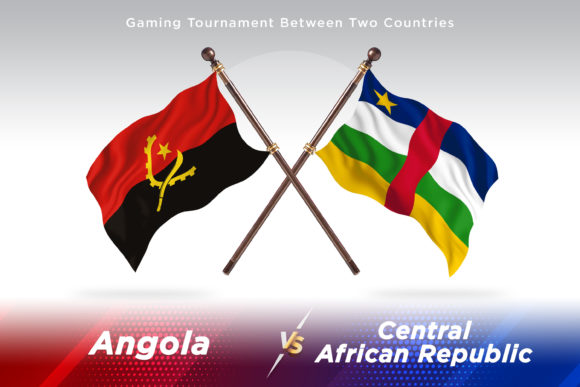
At first glance, both flags incorporate red, yellow or gold, and green—colors drawn from the Pan-African palette. However, their design philosophies and symbolic languages differ significantly. Angola’s flag, adopted at independence in 1975, features a striking horizontal bicolor of red and black with a central emblem of a gear, machete, and star. The Central African Republic’s flag, introduced in 1958, uses four horizontal stripes of blue, white, green, and yellow, overlaid with a vertical red stripe and a yellow five-pointed star in the upper left canton.
For anyone building educational materials, planning cross-border campaigns, or designing assets for events such as international conferences or trade exhibitions, recognizing these visual differences early prevents costly revisions and ensures your work respects national identities.
Angola’s Flag Composition
- Colors: Red (top half) and black (bottom half). Red represents the bloodshed during the independence struggle; black symbolizes the African continent and the Angolan people.
- Central emblem: A half-gear crossed by a machete, with a five-pointed star at the top. The gear and machete reference industrial workers and agricultural laborers, while the star stands for international solidarity and progress.
- Layout: Simple two-band horizontal design. The emblem is centered, making it a focal point for any reproduction.
- Practical note: The emblem is detailed, so scaling the flag down for digital thumbnails or small print runs can cause detail loss. Always request or generate vector versions for clean rendering at any size.
Central African Republic Flag Composition
- Colors: Blue, white, green, and yellow horizontal stripes, with a vertical red stripe through the center. Blue represents liberty, white peace, green hope, yellow tolerance, and red the blood of national sacrifice.
- Canton star: A yellow five-pointed star in the top left. The star suggests unity and progress.
- Layout: More complex—four horizontal stripes intersected by a vertical bar creates a grid-like structure. The star occupies the upper left quadrant, adding asymmetry.
- Practical note: The intersecting red bar and star require precise alignment. When creating CSS layouts, SVG files, or print-ready PDFs, confirm proportions and star placement against official government specifications.
How These Flags Fit Into Real Workflows
Understanding flags is not an isolated trivia task. It intersects with multiple professional workflows where accurate visual representation matters.
Educational Content and Curriculum Design
If you are developing geography, history, or cultural studies materials, comparing African flags helps students grasp post-colonial identity and symbolism. Angola’s flag explicitly references Marxist-inspired iconography from the MPLA movement, while the Central African Republic’s flag reflects a more conciliatory vision—combining French tricolor influences (blue, white, red) with Pan-African green and yellow. Teaching this comparison gives learners a framework for understanding how national symbols encode political history. Use side-by-side image comparisons in slides or handouts, and provide a concise legend for each element.
Branding and Marketing Campaigns
Businesses expanding into Angola or the Central African Republic—or creating regionally themed campaigns—need accurate flag usage. A mismatched flag or incorrect color code undermines credibility. For a campaign targeting Lusophone Africa, for instance, using Angola’s flag correctly signals local knowledge. For a pan-African event, including both flags with proper proportions avoids diplomatic missteps. Store official color references (Pantone, CMYK, RGB, HEX) for both flags in your brand asset library so your design team can pull them instantly.
Angola flag color codes (approximate): Red (Pantone 186 C), Black (Process Black C), Yellow (Pantone 116 C).
Central African Republic flag color codes (approximate): Blue (Pantone 293 C), White (White), Green (Pantone 355 C), Yellow (Pantone 116 C), Red (Pantone 186 C).
Web and UI Design
Digital products that display country selectors, localization menus, or data visualizations often include flag icons. Angola’s flag, with its dark red and black bands, works well on light backgrounds but can lose contrast on dark themes. The Central African Republic’s flag, with multiple bright stripes, reads clearly at small sizes but requires careful handling near similarly striped neighbors (e.g., Senegal or Mali). Test your flag icons at 24×24 pixels against your UI color palette to confirm visibility. Use inline SVG or icon fonts for sharp and accessible rendering.
Event Planning and Conference Branding
If you are organizing a trade delegation, cultural festival, or diplomatic summit featuring participants from both nations, flag display protocol matters. Angola’s flag is typically flown with the red stripe on top and the emblem facing forward. The Central African Republic’s flag must maintain the star on the viewer’s left. Arrange flags alphabetically or by host protocol, and ensure each flag is identical in size and pole height to avoid implying hierarchy. For printed materials such as name tags, stage backdrops, and brochures, use official proportions—Angola’s flag ratio is 2:3, and the Central African Republic’s is 3:5.
Common Pitfalls and How to Avoid Them
Even experienced professionals occasionally swap or misrepresent these two flags. Here are the most frequent errors and practical fixes.
- Confusing the red stripe in the Central African Republic flag with Angola’s red band. Angola’s red is solid and occupies the top half. The Central African Republic’s red is a single vertical bar crossing four stripes. If you see a flag with four horizontal colors and a red vertical line, it is the Central African Republic, not Angola.
- Omitting Angola’s emblem. The gear, machete, and star are not optional decorations—they are legally part of the flag. Never display Angola’s flag as a plain red-and-black bicolor without the emblem. That variant is unofficial and can be perceived as disrespectful.
- Mirroring the Central African Republic’s star. The yellow star always appears in the upper left canton (hoist side). A star on the right side or in the center is incorrect.
- Using wrong shade of blue. The Central African Republic’s blue is a deep, vivid cyan-blue—not navy or pale blue. Check your Pantone reference before print runs.
Quality Control and Long-Term Use
Once you have integrated flag comparisons into your workflow, build a small quality control checklist to maintain consistency.
- Source files: Always download flag assets from official government portals or reputable vector repositories. Avoid using low-resolution JPEGs found through generic image searches.
- Metadata tagging: In your digital asset management system, tag files with both the country name and the flag’s color codes. This allows your team to locate and validate assets quickly during audits.
- Version control: National flags rarely change, but official specifications can be updated. Set a quarterly or annual review of your flag library against current government publications. Subscribe to flag update feeds from resources such as Flags of the World (FOTW).
- Accessibility: For digital publications, include alt text that describes each flag. Example: “Flag of Angola: red and black horizontal bands with a centered emblem of a gear, machete, and star.” Example: “Flag of the Central African Republic: four horizontal stripes of blue, white, green, and yellow with a vertical red stripe and a yellow star in the upper left corner.”
Integration With Broader Projects
The Angola versus Central African Republic flag comparison is rarely a standalone task. More often, it fits into a larger process such as building a country comparison database, designing an African studies curriculum, preparing market entry documentation, or creating a multilingual website. Consider these integration points.
For educators: Combine a flag comparison worksheet with map exercises, national anthem lyrics, and brief historical timelines. Students can then identify how visual symbolism aligns with national narratives. This multi-sensory approach strengthens retention and engagement.
For content creators and bloggers: When writing about travel, business, or culture in Africa, embed a flag comparison as a visual anchor. Readers scanning for country-specific information often rely on flag recognition to orient themselves. A short, clearly written comparison near the top of your article reduces bounce rates and improves user experience.
For designers: If you are creating a poster series, infographic, or presentation deck that covers multiple African nations, group flags by design type (horizontal bicolor, tricolor, star canton, etc.). Angola and the Central African Republic belong to different groups—Angola in the emblem-centered bicolor group, and the Central African Republic in the multi-stripe canton group. This categorization helps you design consistent layouts and visual hierarchies.
For business professionals: In a pitch deck or market analysis, include flag imagery alongside economic data, language details, and regulatory notes. Accurate flag usage signals that you have done your homework and respect the countries you are addressing. This level of detail builds trust with potential partners and clients in Luanda or Bangui.
Practical Implementation Tips
To make flag comparisons a seamless part of your workflow, store reference data in a shared spreadsheet or wiki. Include fields for country name, flag image, color codes in multiple formats, ratio, adoption date, and symbolic meanings. Update this resource annually or whenever you start a project involving these regions. Share it with your team so everyone works from the same source of truth.
When reproducing either flag in print or digital form, test your output at the intended final size. Print a proof at the smallest expected dimension and check that the Angolan emblem remains legible and that the Central African Republic’s star is clearly visible. Make adjustments before full production to avoid waste.
If you are commissioning a videographer, photographer, or animator who will feature flags, provide them with a style sheet that includes the exact flag specifications and examples of correct and incorrect usage. This upfront clarity prevents reshoots and post-production fixes.
Final Observations
Angola and the Central African Republic both use flags that are rich in Pan-African symbolism, yet each tells a distinct story through color placement, emblem choice, and overall geometry. Angola’s flag is bold, direct, and heavy with industrial and agricultural imagery. The Central African Republic’s flag is more layered, combining French and African influences into a compact grid. For anyone working with international audiences, understanding these differences is not academic—it is a practical skill that improves communication, avoids offense, and strengthens your professional output.
By treating flag comparison as part of your design, content, or research process rather than as a separate task, you ensure that your work remains accurate, respectful, and visually coherent. Whether you are building a lesson plan, designing a website, planning an exhibition, or writing an article, the ability to distinguish Angola from the Central African Republic at a glance will serve you and your audience well.