Andorra Versus South Sudan: A Comparative Look at Two Distinct Flags
Flags are far more than decorative cloth. They condense history, identity, and political philosophy into a single visual statement. When placed side by side, the flags of Andorra and South Sudan appear to share little at first glance. Yet each tells a powerful story about its nation’s origins, values, and aspirations. Understanding how they compare helps you appreciate not only the flags themselves but also the countries they represent. This article explores the design, symbolism, historical context, and practical relevance of the Andorra versus South Sudan two flags comparison, so you can see what makes each unique and what they reveal about their respective nations.
Understanding the Flag of Andorra
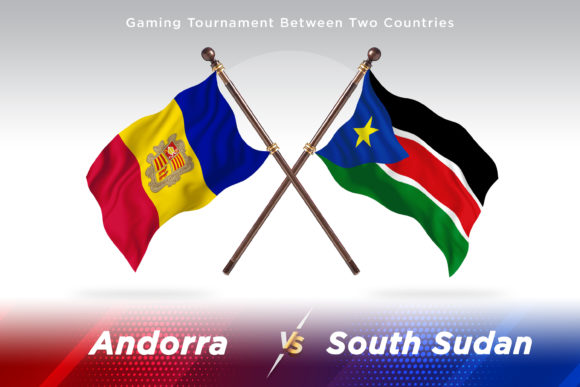
The flag of Andorra consists of three vertical stripes in blue, yellow, and red, with the national coat of arms centred on the yellow band. At first glance, it resembles a number of other tricolour flags, but the details set it apart. The blue and red stripes reference the flag of France, while the yellow and red recall the colours of Catalonia and the Spanish region of Urgell. This blend reflects Andorra’s unique historical status as a principality under the joint suzerainty of the Bishop of Urgell (Spain) and the President of France.
The coat of arms at the centre is divided into four quadrants. Two quadrants display the arms of the Bishop of Urgell and the Count of Foix, while the other two show the arms of Catalonia and the Viscount of Béarn. Below the shield, the national motto “Virtus Unita Fortior” appears—Latin for “United virtue is stronger.” This motto encapsulates the small nation’s survival strategy: unity between its two co-princes and a balance of external influences.
Design Features and Symbolism
The Andorran flag uses a vertical tricolour layout that is both modern and traditional. The blue stripe on the hoist side is slightly narrower than the other two in some official specifications, though many reproductions use equal proportions. The yellow stripe is the widest when the coat of arms is included, ensuring the emblem remains clearly visible.
The colours themselves carry layered meaning. Blue represents the sky and also nods to France. Yellow symbolises the sun and the generosity of the land, while also linking to Catalonia and Spain. Red stands for the blood of those who fought for independence and again ties to both French and Spanish heraldry. This dual reference is intentional: Andorra has maintained its sovereignty for centuries by balancing the interests of its two powerful neighbours.
For anyone studying European microstates or flags with historical coats of arms, the Andorran flag offers a rich case study. It is not a simple design, but its complexity is a direct reflection of the country’s political arrangement. When considering the Andorra versus South Sudan two flags comparison, the Andorran flag represents continuity, tradition, and a carefully maintained equilibrium.
Understanding the Flag of South Sudan
The flag of South Sudan is one of the youngest national flags in the world, adopted on July 9, 2011, when the country gained independence from Sudan. It features a horizontal tricolour of black, red, and green, separated by a white fimbriation, with a blue triangle at the hoist side containing a yellow five-pointed star. The design is bold, modern, and highly symbolic.
Black represents the people of South Sudan. Red stands for the blood shed during the long struggle for independence. Green symbolises the agricultural wealth and natural resources of the land. The white stripes signify peace and the hope for a stable future. The blue triangle represents the River Nile, which flows through the country and is a vital water source. The yellow star at the centre of the triangle symbolises unity, progress, and the guiding light of the nation.
Design Features and Symbolism
The South Sudanese flag follows a horizontal layout common among many African nations, but it incorporates distinct elements that set it apart. The black, red, and green bands echo the Pan-African colours used by many countries across the continent, linking South Sudan to a broader regional identity. The blue triangle and yellow star add a unique dimension, making the flag instantly recognisable among other African tricolours.
The flag’s proportions and colour shades are precisely defined in the country’s constitution. The black stripe at the top is the widest, followed by the red and green stripes. The white fimbriations are narrow, acting as visual separators that enhance contrast and readability. The blue triangle extends from the hoist, with its apex reaching about one-third of the way across the flag. The yellow star is centred within the triangle, its five points symbolising the five regions of the country.
For researchers or enthusiasts comparing flags of young nations, South Sudan’s flag is a textbook example of post-colonial identity building. It conveys hope, sacrifice, and a forward-looking spirit. In the context of the Andorra versus South Sudan two flags discussion, this flag represents change, emergence, and the challenges of building a new state.
Key Differences Between the Two Flags
When you place the Andorran and South Sudanese flags side by side, the differences are striking. The most obvious distinction is the layout: Andorra uses a vertical tricolour, while South Sudan uses a horizontal tricolour with a chevron. But the contrasts go deeper than orientation.
- Historical depth: The Andorran flag draws on centuries of heraldic tradition and a complex feudal arrangement. The South Sudanese flag was designed in the 21st century to articulate a new national identity after decades of conflict.
- Symbolic density: Andorra’s flag includes a detailed coat of arms with multiple quarterings, each referencing a historical entity. South Sudan’s flag uses geometric shapes and a limited colour palette to convey broad, universal ideas.
- Regional context: Andorra’s colours reflect European neighbours and historical overlords. South Sudan’s colours align with Pan-African symbolism and the specific geography of the Nile.
- Recognition factor: The South Sudanese flag is designed for instant recognition at a distance, with high contrast and a distinctive star. The Andorran flag requires closer inspection to appreciate the coat of arms and its nuances.
- Proportions: Andorra’s flag typically uses a 2:3 ratio, while South Sudan’s flag uses a 1:2 ratio, making it longer and more rectangular.
These differences are not arbitrary. They reflect fundamentally different national stories. Andorra’s flag evolved over time, accumulating symbols as the country negotiated its position between France and Spain. South Sudan’s flag was consciously designed at a specific moment to project unity and hope for a fragmented population. When evaluating the Andorra versus South Sudan two flags, you are comparing an evolved historical banner with a deliberately crafted modern one.
Strengths and Tradeoffs of Each Design Approach
Both flags serve their purposes well, but each approach has strengths and tradeoffs. The Andorran flag excels in storytelling. Anyone who takes the time to study the coat of arms can learn about the country’s history, its co-princes, and its motto. However, that richness comes at a cost: the flag is harder to reproduce accurately, especially at small sizes or from memory. The coat of arms can become blurry or indistinct when printed on cheap materials or displayed at a distance.
The South Sudanese flag, by contrast, prioritises clarity and emotional impact. The bold horizontal stripes and the yellow star against the blue triangle create a strong visual that works well at any scale. It is easy to draw, easy to remember, and easy to recognise even when partially obscured. The tradeoff is a loss of historical specificity. The flag tells a story of struggle and hope, but it does not capture the nuanced regional, ethnic, or political complexities that continue to shape the country.
For someone choosing which flag to study, display, or use in educational materials, the decision depends on your goal. If you are teaching European heraldry or the history of microstates, the Andorran flag offers more depth. If you are discussing modern nation-building, African identity, or flag design principles, the South Sudanese flag provides a clearer example.
When Each Flag May Be the Right Choice
There are practical contexts where one flag is more appropriate than the other. For collectors of historical flags or those interested in vexillology, the Andorran flag is appealing because of its layered symbolism and long evolution. It also appears on stamps, coins, and official documents in ways that invite further exploration. If you are curating a display of European flags, the Andorran flag adds variety and intellectual interest.
The South Sudanese flag, on the other hand, is a strong choice for discussions about contemporary geopolitics, African independence movements, or the challenges of post-conflict reconstruction. It is also a flag that resonates emotionally with diaspora communities and those who follow international affairs. For event organisers or educators seeking to represent a broad range of modern nations, the South Sudanese flag is both visually striking and symbolically meaningful.
However, neither flag is inherently better. The right choice depends on your context. If you are simply comparing the Andorra versus South Sudan two flags for personal interest or academic work, examining both side by side gives you a richer understanding of how flags function as carriers of meaning across different cultures and time periods.
Factors to Consider When Comparing National Flags
When you evaluate flags—whether for research, design, or educational purposes—several factors matter beyond aesthetics. Consider the following decision points:
- Historical authenticity: Does the flag’s design reflect a continuous tradition, or was it created recently to meet political needs? Both approaches are valid, but they serve different narratives.
- Ease of reproduction: Can the flag be accurately reproduced at different sizes and on various materials? Complex coats of arms may lose detail, while simple geometric designs remain legible.
- Symbolic clarity: Are the meanings of colours and symbols widely understood, or do they require explanation? A flag that needs extensive interpretation may be less effective as a quick identifier.
- Cultural resonance: Does the flag resonate with the people it represents? A flag that feels imposed or disconnected from local identity may struggle to inspire loyalty.
- Visual distinctiveness: Does the flag stand out among neighbouring flags or within its region? Similarity can cause confusion, especially in international contexts.
Applying these criteria to the Andorra versus South Sudan two flags reveals clear tradeoffs. Andorra scores high on historical authenticity and cultural resonance but lower on ease of reproduction and visual distinctiveness. South Sudan scores high on symbolic clarity and distinctiveness but lower on historical depth. Neither flag is perfect, but both are effective for their intended audiences.
Practical Examples and Use Cases
Imagine you are a teacher preparing a lesson on world flags. You might use the Andorran flag to show how a small nation can maintain independence by balancing larger powers. You could ask students to identify the four quadrants of the coat of arms and research the historical entities they represent. The South Sudanese flag, in the same lesson, could illustrate how a new country uses design to forge a unified identity from diverse communities. Students could discuss why the star has five points or what the blue triangle signifies about the country’s geography.
For a designer working on a multicultural event, the choice between the two flags might come down to visual impact. The South Sudanese flag works well on banners, stage backdrops, and digital screens because of its bold contrast. The Andorran flag is better suited for printed materials like brochures or certificates, where the coat of arms can be appreciated up close.
For someone researching flag symbolism academically, both flags offer rich material. The Andorran flag is an example of how heraldic traditions persist in modern national symbols. The South Sudanese flag is a case study in how new states construct visual identities from scratch. Comparing the Andorra versus South Sudan two flags in this context reveals broader patterns in flag design, such as the tension between historical continuity and modern clarity.
Making an Informed Decision
Whether you are studying flags for professional reasons, personal curiosity, or practical application, the key is to focus on context. No single flag is universally superior. The Andorran flag is a treasure of European heraldry and a testament to diplomatic survival. The South Sudanese flag is a bold statement of independence and hope for the future. Each works best when used in the right setting and understood on its own terms.
If you need a flag that tells a detailed historical story and rewards close attention, Andorra’s flag is a strong choice. If you need one that communicates instantly and resonates with themes of struggle and renewal, South Sudan’s flag may be more appropriate. For a balanced perspective, studying both together gives you a deeper appreciation for the art and politics of flag design.
The Andorra versus South Sudan two flags comparison ultimately shows that flags are not just symbols—they are arguments. They argue for a particular version of history, a set of values, and a vision for the future. Understanding those arguments helps you see beyond the cloth and into the heart of the nations they represent.