Angola Versus Finland Flags: A Comparative Look at Design, Symbolism, and National Identity
When exploring world flags, few comparisons reveal as much about contrasting histories, ideologies, and design philosophies as the Angola Versus Finland Flags. One bursts with the revolutionary red and black of liberation, the other breathes with the cool blue and white of Nordic tradition. This article unpacks both flags in detail, compares their core messages, examines their practical use in modern contexts, and considers what each tells us about the country it represents.
Deconstructing the Flag of Angola
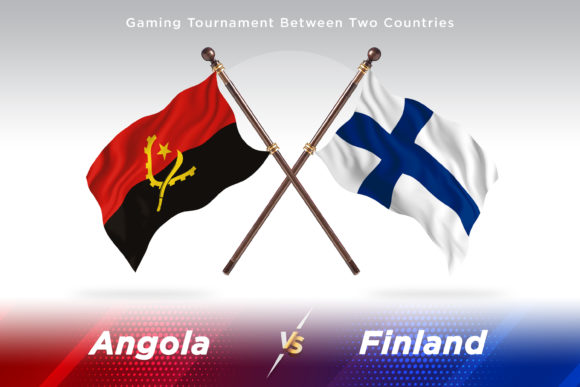
Adopted at independence on November 11, 1975, the flag of Angola is a powerful political statement. Its design consists of two horizontal bands: a red upper stripe and a black lower stripe, with a central emblem in gold. The emblem includes a machete crossed with a cogwheel, topped by a star. Every element is loaded with meaning.
Red symbolizes the blood shed by Angolans during their long struggle for independence from Portuguese colonial rule. Black represents the African continent and the people of Angola. The cogwheel stands for industry and workers, the machete for agriculture and the peasantry. The star embodies international solidarity and progress.
Design and Color Choices
Angola’s flag uses a limited palette of three colors: red, black, and gold. This simplicity makes it instantly recognizable even from a distance. The gold emblem is centrally placed for balance, but the lack of symmetry in the crossed tools gives the design a dynamic, forward-moving feel. The proportions follow the standard 2:3 ratio used by many nations.
One striking feature of the Angola Versus Finland Flags comparison is that Angola’s flag is relatively young. It was crafted during a specific political era—the Marxist-inspired People’s Movement for the Liberation of Angola (MPLA) government. Over the years, there have been debates about changing the flag to remove overt revolutionary symbolism, but it remains unchanged.
Understanding the Flag of Finland
Finland’s national flag, known as the siniristilippu (blue cross flag), could hardly be more different. It features a blue Nordic cross on a white field. The cross extends to the edges of the flag, and the vertical arm is offset toward the hoist side, a hallmark of Scandinavian flag design. This flag was officially adopted in 1918 after Finland gained independence from Russia.
White symbolizes the snow that covers the Finnish landscape for much of the year, while blue represents the thousands of lakes and the open sky. The cross is a nod to Finland’s Christian heritage and its cultural ties to the other Nordic countries. The design is clean, minimalist, and deeply tied to nature.
Historical Evolution
Finland’s flag went through several iterations. In the 19th century, various unofficial flags were used, often incorporating the coat of arms. The current design was adopted after a competition and public debate. Interestingly, the proportions of the Finnish flag are slightly different from other Nordic flags, with the width of the cross arms set at specific measurements to create visual harmony.
In the Angola Versus Finland Flags comparison, Finland represents a flag that emerged from a national romantic movement, emphasizing natural landscapes and shared cultural identity rather than political revolution. The flag is widely loved and appears everywhere from government buildings to summer cottages.
Visual and Semantic Contrasts
At first glance, the Angola Versus Finland Flags clash in almost every way: hot versus cool, complex emblem versus clean cross, revolutionary versus peaceful. But that surface-level contrast hides deeper similarities.
Color Symbolism
- Angola: Red (blood of martyrs), Black (African heritage), Gold (wealth and future).
- Finland: White (snow, purity, summers), Blue (lakes, sky, honesty).
Both flags use their colors to tell a national story. Angola’s story is one of struggle and liberation. Finland’s is one of harmony with nature and Nordic solidarity. The emotional response each flag evokes is markedly different: one inspires defiance, the other tranquility.
Structural Complexity
Angola’s flag relies on a central emblem with multiple symbolic objects. Finland’s flag uses a simple cross. In vexillology (the study of flags), simplicity is often prized because it aids recognition and reproduction. The Nordic cross is one of the simplest and most effective design patterns in flag history. Angola’s emblem, while meaningful, is more complex and could be harder to draw from memory. That said, the Angola Versus Finland Flags both succeed in being highly distinctive because of their unique color combinations.
Practical Considerations and Modern Usage
Flags are not just static symbols; they are used in practical contexts every day. Thinking about Angola Versus Finland Flags through a practical lens reveals differences in flag etiquette, display customs, and even manufacturing.
Flag Protocol and Display
In Finland, flag days are strictly observed. The flag is flown from sunrise to sunset, and there are detailed rules about when the flag can be displayed, especially on public buildings. The Finnish flag is also used during private celebrations like birthdays and weddings. It’s common to see small Finnish flags on cakes or as table decorations.
In Angola, state institutions fly the flag regularly, and it is prominent during national holidays such as Independence Day. However, private use of the flag is less widespread than in Finland. The flag is more often seen as a political symbol than a cultural one, especially given its origins.
Manufacturing and Durability
Both flags are typically made from polyester or nylon. The complexity of Angola’s emblem means it must be printed or embroidered with precision. The cogwheel and machete need to be sharply defined on fabric. Finland’s flag, by contrast, can be sewn from separate pieces of fabric, making it cheaper to produce and more durable on windy days. For outdoor use, flag manufacturers often recommend Finland’s design for longevity.
When considering the Angola Versus Finland Flags in a real-world setting, the Finnish flag is easier to render at small sizes (like in lapel pins) while keeping clarity. The Angolan flag risks losing detail if scaled down too much.
Lessons for Designers and Enthusiasts
For anyone interested in flag design, the Angola Versus Finland Flags offer two different philosophies. The Angolan flag teaches you that a complex emblem can work if the colors are bold and the symbolism is strong. The Finnish flag shows you that the simplest geometry often creates the most timeless and recognizable result.
If you are designing a logo, flag, or any symbolic graphic, consider the following:
- Limited palette – Both flags use only 3 colors. That forces focus and memorability.
- Clear silhouette – Finland’s cross is visible from any angle. Angola’s emblem is more complex but still distinct at a distance due to the gold against black/red.
- Cultural relevance – Symbols should be rooted in what the people value. Angola chose struggle and industry; Finland chose nature and faith.
These lessons apply beyond flags. In branding, user interface design, or even packaging, the Angola Versus Finland Flags provide a case study in balancing meaning with simplicity.
Where Each Flag Fits in Today’s World
Flags also function in global contexts: international sports, diplomacy, travel, and online media. The Angola Versus Finland Flags appear side by side at United Nations meetings, at the Olympic Games, and in travel vlogs. Their contrasting styles often lead to interesting conversations.
For travelers and expats, understanding the flag of your host country is a sign of respect. If you find yourself in Luanda, the flag’s revolutionary history is deeply respected. In Helsinki, the blue cross evokes a sense of calm and Nordic pride. Knowing these nuances helps avoid awkward cultural faux pas. For example, never use Angola’s flag in a disrespectful way, such as letting it touch the ground. In Finland, the flag should never be flown in poor condition.
Digital and Social Media Use
Emoji representation (🇦🇴 and 🇫🇮) has made flags more ubiquitous than ever. In online discussions about politics, sports, or travel, the Angola Versus Finland Flags appear as shorthand for national identity. The Finnish flag emoji is often used in posts about nature, education, or happiness. The Angolan flag emoji appears in contexts of African culture, music, or political discourse.
This digital presence reinforces the flags’ modern relevance. They are not just historical artifacts; they are living symbols that evolve with each generation’s use.
Common Factors People Consider Before Learning About Flags
Individuals often research Angola Versus Finland Flags for specific reasons. Perhaps you are a student working on a geography project. Maybe you are a graphic designer looking for inspiration. Or you might be preparing for a trip and want to understand local customs. Here are the key factors that matter:
- Historical context – The Angolan flag is tied to the Cold War and decolonization. Finland’s flag is tied to national independence movements of the early 20th century.
- Symbolic depth – Angola’s flag has explicit political symbols (machete, cogwheel, star). Finland’s flag uses general natural and cultural symbols.
- Design standards – Finland follows the Nordic cross pattern common in Scandinavia. Angola follows a generic horizontal bicolor with a central emblem.
- Ease of reproduction – Finland’s is easier to draw and manufacture. Angola’s requires more care for the emblem.
For anyone new to vexillology, comparing these two flags is an excellent starting point because they represent opposite ends of the design spectrum.
Final Observations on Angola Versus Finland Flags
There is no “better” flag between Angola and Finland. Each flag perfectly serves its purpose for its nation. The Angola Versus Finland Flags comparison highlights how flags are a mirror of a country’s soul. If you had to choose one word for each: Angola’s flag is fierce; Finland’s flag is calm. Both are powerful in their own right.
When you see the Angolan flag waving, you remember the resilience of a people who fought for freedom. When you see the Finnish flag, you think of silent forests and thousand lakes. Both flags make you feel something—and that is the mark of effective national symbolism. Whether you are a student, designer, traveler, or simply curious, the Angola Versus Finland Flags offer a rich field for exploration and appreciation.