Two Island Flags, Two Stories: Antigua Versus Madagascar in Design and Symbolism
First Impressions: What the Eye Sees
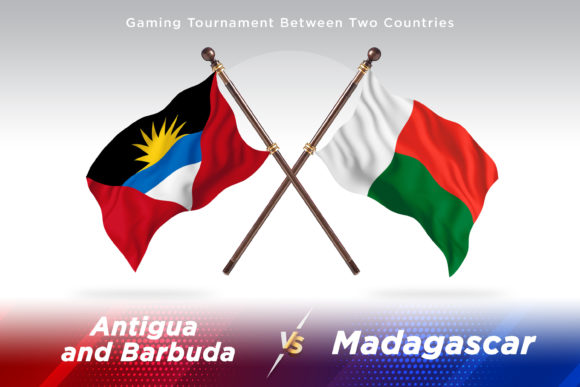
At first glance, the flags of Antigua and Barbuda and Madagascar present strikingly different visual languages. The flag of Antigua and Barbuda commands attention with its bold inverted triangle anchored by a rising golden sun, while the flag of Madagascar relies on a clean tri-color arrangement of white, red, and green. In the conversation of Antigua Versus Madagascar Two Flags, the immediate contrast lies in complexity versus simplicity. Antigua's flag uses five colors and a geometric shape that cuts across the field, whereas Madagascar's flag follows a more traditional vertical-horizontal striped pattern. For a designer, educator, or traveler, understanding these visual choices offers a window into how each nation presents itself to the world.
The flag of Antigua and Barbuda features a red background with a large inverted isosceles triangle that spans from the top edge to the bottom. This triangle is composed of three horizontal bands: black at the top, blue in the middle, and white at the bottom. Within the black band sits a golden half-sun with seven rays. Madagascar's flag, by contrast, consists of a vertical white band on the hoist side and two horizontal bands of red and green on the fly side. The structural differences are immediate and intentional, and they reflect distinct historical and cultural narratives.
Antigua and Barbuda’s Bold Inverted Triangle
The inverted triangle is the most defining element of Antigua and Barbuda’s flag. This shape is rare among national flags and immediately sets the design apart. The triangle’s apex points downward, creating a sense of movement and focus toward the center. The rising sun inside the black band is not merely decorative—it anchors the entire composition. The seven rays of the sun are said to represent a new era, and the overall effect is one of energy and forward momentum. For professionals in branding or visual communication, this flag is a case study in using uncommon geometry to create lasting recognition.
Madagascar’s Clean Horizontal and Vertical Lines
Madagascar’s flag is a study in balance and restraint. The vertical white stripe on the left is one-third of the flag’s length, while the red and green horizontal bands each take half of the remaining space. This arrangement is both classic and functional. The white stripe ensures the flag remains distinct when flying from a pole, and the red-green combination is highly visible at distance. For educators teaching flag design, Madagascar’s flag is an excellent example of how simple color blocks can convey meaning without additional iconography.
The Symbolic Weight Behind the Colors
When examining Antigua Versus Madagascar Two Flags from a symbolic perspective, the color choices reveal deep layers of national identity. Both flags use colors that speak to geography, history, and aspiration, but they do so in markedly different ways. Antigua and Barbuda’s palette is broader and more specific, while Madagascar’s colors are drawn from a longer historical lineage. Understanding these differences helps researchers, travelers, and business owners appreciate how each nation positions itself culturally and politically.
Red, Black, Blue, White, and Gold: Antigua’s Palette
The red field of Antigua and Barbuda’s flag symbolizes the energy and vitality of the people. Black represents the African heritage of the majority population, blue stands for hope, and white signifies the sandy beaches and the surrounding Caribbean Sea. The golden sun represents a new dawn—specifically, the dawn of independence. Each color was chosen deliberately to reflect specific aspects of national life. For a business owner looking to understand regional branding, this kind of layered symbolism is common among Caribbean nations and reflects a post-colonial desire to articulate identity clearly.
White, Red, and Green: Madagascar’s Tri-Color
Madagascar’s flag uses white to represent purity and the desire for peace, red to symbolize the sovereignty of the nation and the blood of its ancestors, and green to reflect the coastal regions and the importance of agriculture and hope for the future. The red and white are historically linked to the Merina monarchy, while green was added to represent the coastal peoples and the natural environment. This tri-color system is rooted in the nation’s pre-colonial and colonial history. For historians and educators, Madagascar’s flag illustrates how a nation can blend traditional symbols with modern national aspirations.
Historical Moments That Shaped Each Flag
The adoption dates and historical contexts of these two flags add another layer of depth to the Antigua Versus Madagascar Two Flags comparison. Antigua and Barbuda adopted its flag on February 27, 1967, when it became an associated state of the United Kingdom, and it retained the flag upon full independence in 1981. Madagascar adopted its flag on October 14, 1958, as it prepared for independence from France, which came in 1960. Both flags emerged from the wave of decolonization in the mid-20th century, but their design processes and inspirations differed greatly.
Antigua’s Rising Sun: A Post-Colonial Dawn
The flag of Antigua and Barbuda was designed by Reginald Samuel, a teacher and artist who won a national competition. The rising sun is particularly significant—it symbolizes the beginning of a new era, not just politically but culturally. The seven rays of the sun are sometimes interpreted as representing the seven parishes of the country. This kind of participatory design process is common in newly independent nations, and the resulting flag is rich with local meaning. For creators and designers, this story underscores the value of community input in developing national symbols.
Madagascar’s Flag: From Monarchy to Republic
Madagascar’s flag draws heavily from the colors of the Merina Kingdom, which ruled much of the island before French colonization. The red and white were used by the Merina monarchy, and the green was added after independence to represent the coastal populations and the nation’s agricultural base. The flag thus serves as a bridge between the pre-colonial past and the modern republic. For researchers studying post-colonial identity, Madagascar’s flag offers a more gradual transition of symbolism compared to the more radical redesign seen in Antigua and Barbuda.
Practical Use Cases and Real-World Relevance
Beyond their symbolic and historical dimensions, the flags of Antigua and Barbuda and Madagascar are used in practical contexts that affect tourism, diplomacy, education, and digital media. For business owners, travelers, and educators, understanding how these flags function in real-world scenarios is just as important as knowing their design history. The Antigua Versus Madagascar Two Flags comparison becomes particularly useful when applied to branding, marketing, and cultural representation.
Flags in Tourism Marketing
Antigua and Barbuda’s flag appears prominently on tourism websites, brochures, and airport signage, often accompanied by imagery of beaches and resorts. The flag’s bright colors and distinctive sun motif reinforce the message of a warm, welcoming destination. Madagascar’s flag, while less graphically bold, is used extensively in eco-tourism marketing, where the green band resonates with the nation’s reputation for unique biodiversity. For a travel professional, the choice of flag imagery in marketing materials can influence a traveler’s first impression of the destination.
Flags in International Relations and Diplomacy
At the United Nations and other international forums, both flags are flown with equal dignity, but their visual distinctiveness affects recognition. Antigua and Barbuda’s flag, with its unique triangle and sun, is easily identifiable even at a distance. Madagascar’s flag, while elegant, can sometimes be confused with other red-white-green tri-color flags from Africa and Europe. For diplomats and international business professionals, this distinction matters in contexts where quick visual identification is important, such as at conferences or bilateral meetings.
Flags in Digital Spaces and Emoji
Both flags are represented in the Unicode emoji set, making them accessible for digital communication. The Antigua and Barbuda flag emoji shows the sun and triangle clearly, while the Madagascar flag emoji appears as a simple tri-color. For social media managers and content creators, understanding how these flags render across platforms is important for accurate representation. The difference in visual complexity also affects how each flag is used in memes, infographics, and other shareable content.
A Vexillological Lens: Design Principles and Effectiveness
From a vexillological perspective, the Antigua Versus Madagascar Two Flags comparison offers a fascinating study in contrast. Antigua and Barbuda’s flag follows the principle of distinctiveness by using an uncommon shape, while Madagascar’s flag prioritizes simplicity and ease of reproduction. Both are effective, but for different reasons. Antigua’s flag scores high on memorability and uniqueness, while Madagascar’s flag excels in clarity and scalability. For a graphic designer or educator teaching flag design, these two flags provide excellent case studies in trade-offs between complexity and simplicity.
Color contrast is another area where the two flags differ. Antigua and Barbuda’s flag uses multiple contrasting colors to create visual impact, but the intricate design can be challenging to reproduce at very small sizes. Madagascar’s flag uses high-contrast colors—white against red and green—that remain clear even when scaled down. For applications like lapel pins, social media icons, or small print, Madagascar’s flag maintains legibility better. For large displays such as stadium banners or building facades, Antigua and Barbuda’s flag delivers more visual drama.
How Creators and Educators Use These Flags
Educators teaching geography, history, or civics often use the Antigua Versus Madagascar Two Flags comparison to illustrate how national symbols encode values and history. Students can analyze the color choices, shapes, and historical adoption dates to understand broader trends in post-colonial nation-building. For example, a lesson might ask students to compare the complexity of Antigua’s flag with the simplicity of Madagascar’s and discuss how each reflects different national priorities.
Creators such as graphic designers and illustrators may use these flags as inspiration for projects involving Caribbean or African themes. The geometric precision of Antigua’s inverted triangle can inform logo designs, while Madagascar’s clean tri-color palette works well in minimalist compositions. For a hobbyist creating a travel blog or a cultural infographic, incorporating these flags with accurate proportions and colors demonstrates attention to detail and respect for the source material.
The Deeper Cultural Resonance
At a deeper cultural level, both flags reflect the personalities of their nations. Antigua and Barbuda’s flag is bold, aspirational, and unapologetically modern—much like the nation’s identity as a Caribbean tourism hub with a vibrant cultural scene. Madagascar’s flag is more reserved and historically grounded, reflecting the nation’s rich biodiversity, complex history, and ongoing development challenges. In the Antigua Versus Madagascar Two Flags comparison, we see not just two designs, but two worldviews. One looks forward with energy, the other balances tradition with hope.
For business owners and investors, understanding these cultural nuances can improve communication and relationship-building. A flag is often the first symbol a foreign partner sees, and knowing its meaning signals respect and cultural awareness. For researchers and hobbyists, these flags offer endless avenues for exploration—from color theory to political science to graphic design.
Observations on the Antigua Versus Madagascar Two Flags Comparison
Bringing together the threads of design, symbolism, history, and practical use, the Antigua Versus Madagascar Two Flags comparison reveals that no two flags tell the same story. Antigua and Barbuda’s flag is a deliberate break from the colonial past, using rare geometry and bold color to announce a new beginning. Madagascar’s flag is a synthesis of pre-colonial heritage and modern aspirations, using classic tri-color design to bridge eras. Both flags are effective in their contexts, and both reward close study.
For anyone seeking to understand national identity through symbols, these two flags provide a rich and accessible starting point. Whether you are a teacher preparing a lesson, a designer seeking inspiration, a traveler wanting to understand your destination, or a business professional navigating international markets, the flags of Antigua and Barbuda and Madagascar offer more than meets the eye. They are not just pieces of cloth—they are statements of who a people are and who they aspire to become.