Comparing the Flags of Andorra and Dominica: Symbolism, Design, and National Identity
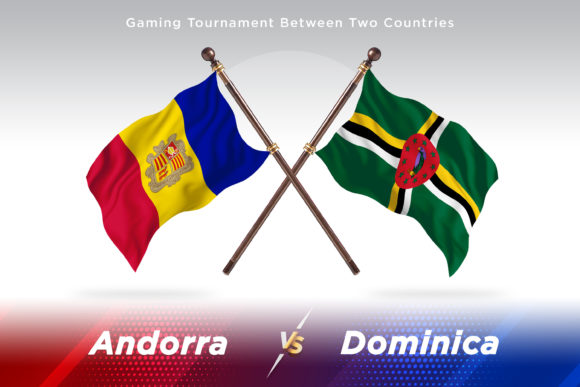
Flags are far more than colorful pieces of fabric. They are compact visual statements of a nation's history, values, geography, and aspirations. When you place the flag of Andorra next to the flag of Dominica, you might notice some surface similarities — both use vertical stripes and both feature prominent central emblems. But a closer look reveals two vastly different stories, rooted in contrasting landscapes, political histories, and cultural identities. This article explores the flags of Andorra and Dominica from the ground up, explaining their design elements, the meaning behind their symbols, and what they reveal about each nation. Whether you are a student, a traveler, or simply curious about the world, understanding these flags offers a window into two remarkable countries.
Why Compare Andorra and Dominica?
At first glance, Andorra and Dominica seem unlikely companions for a flag comparison. Andorra is a small, landlocked principality nestled in the Pyrenees mountains between France and Spain, known for its ski resorts and duty-free shopping. Dominica is an island nation in the Caribbean, famous for its rainforests, volcanoes, and vibrant Creole culture. Yet both nations have designed flags that intentionally communicate their unique identities. By comparing them, we learn how geography, history, and political structure shape national symbols. The exercise also helps us appreciate the diversity of flag design conventions — from European heraldic traditions to Caribbean natural symbolism.
Design and Layout
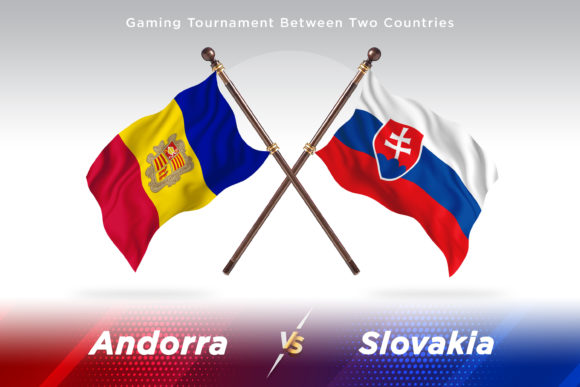
The Andorran flag consists of three vertical stripes in blue, yellow, and red. The central yellow stripe is slightly wider than the two outer stripes, creating a balanced but asymmetrical proportion. At the heart of the flag sits the Andorran coat of arms, a detailed heraldic shield divided into four quarters. The official flag proportions are 7:10, and the shield occupies a prominent position in the center.
The Colors and Their Meaning
The colors of the Andorran flag are not arbitrary. They reflect the principality's historical ties to its two powerful neighbors. Blue and red are associated with France, while yellow and red recall the colors of the Spanish region of Catalonia, with which Andorra shares deep cultural and linguistic bonds. The combination of these colors symbolizes the co-principality system, under which Andorra has been jointly ruled by the President of France and the Bishop of Urgell (in Catalonia) for centuries. This is a rare and enduring political arrangement that directly shapes the flag's design.
The Coat of Arms: A Window into Andorran Identity
The coat of arms tells a more detailed story. It is divided into four quadrants, each representing a key historical entity:
- Upper left (Mitre and Crosier): Symbolizes the Bishop of Urgell, one of the co-princes.
- Upper right (Three red bars on gold): Represents the Counts of Foix, a medieval dynasty that once held authority over Andorra. This later passed to the French crown and eventually to the President of France.
- Lower left (Four red bars on gold): The traditional emblem of Catalonia, highlighting Andorra's cultural and linguistic connection to the region.
- Lower right (Two red cows on silver): Represents the Viscounts of Béarn, another historical ruling house linked to Andorra's complex feudal past.
Below the shield is a ribbon bearing the national motto: “Virtus Unita Fortior” — Latin for “United virtue is stronger.” This motto reinforces the idea that Andorra's strength comes from the unity of its co-princes and its people. The entire design is a masterclass in heraldic tradition, using symbols that have been recognized for centuries in European governance.
Common Misunderstandings about Andorra's Flag
A frequent assumption is that Andorra's flag is simply a variation of the French or Spanish tricolor. In reality, the blue-yellow-red combination predates modern national flag standardization in the region. Another misconception is that the coat of arms is purely decorative. In Andorra's case, the shield is constitutionally defined and carries specific legal meaning — it is not merely an adornment but a core element of national sovereignty. Some also confuse the flag with that of Moldova or Chad due to similar color schemes, but the coat of arms instantly distinguishes it.
Design and Layout
Dominica's flag features a green field crossed by three vertical and three horizontal stripes in yellow, black, and white, forming a cross — or more precisely, a triple-colored cross. In the center sits a red circular disc bearing ten green five-pointed stars surrounding a Sisserou Parrot (also known as the Imperial Amazon). The flag uses a 1:2 proportion and is designed to be instantly recognizable even at a distance.
The Colors and Their Meaning
Every color on Dominica's flag carries explicit meaning, much of it tied to the island's natural environment and cultural values:
- Green: Represents the lush rainforests and fertile land that cover much of the island. Dominica is known as the “Nature Isle of the Caribbean” for good reason.
- Yellow: Symbolizes the original inhabitants, the Kalinago people, as well as the sunshine and citrus fruits that are central to the island's agriculture.
- Black: Represents the African heritage of the majority of Dominicans, acknowledging the history of the transatlantic slave trade while also celebrating the resilience of the people.
- White: Stands for purity, peace, and the clear waters that surround the island.
- Red disc: The central circle represents social justice and the blood shed by those who fought for freedom and independence.
The Symbolism of the Cross and Stars
The cross on Dominica's flag is not a religious symbol in the strict sense. It represents the Holy Trinity, reflecting the island's predominantly Christian heritage, but also serves as a unifying geometric element. The ten green stars surrounding the parrot represent the ten parishes of Dominica, each one a distinct administrative and cultural region. Their arrangement in a circle signifies unity and equality among the parishes. The stars are green to echo the national color and to emphasize the connection to the land.
The Sisserou Parrot: A National Treasure
The centerpiece of the flag is the Sisserou Parrot (Amazona imperialis), a bird found only in Dominica's mountain forests. This parrot is critically endangered and has become a powerful national symbol of uniqueness and preciousness. Its inclusion on the flag signals that Dominica's natural heritage is not just a backdrop but a central part of national identity. The parrot is depicted in purple and green, colors that are rare in national flag design. Purple, historically associated with royalty and rarity, here connects to the bird's actual plumage and Dominica's status as a unique ecological treasure. The choice of an endemic species is deliberate — it tells the world that Dominica is irreplaceable.
Common Misunderstandings about Dominica's Flag
One common confusion is mistaking Dominica's flag for that of the Dominican Republic, which also uses a central cross and a coat of arms. However, the Dominican Republic's flag features a white cross on a blue-and-red background with a completely different central emblem. Another misunderstanding is that the green field is simply a generic “nature” color — in fact, it specifically represents Dominica's particular rainforest ecosystem, not just the abstract concept of nature. Some also assume the ten stars represent the original ten parishes when in fact that is exactly what they do, but the number has remained unchanged despite administrative reorganization.
Similarities
Despite their differences, the two flags share some interesting parallels:
- Central emblems: Both flags feature a prominent central symbol — a coat of arms in Andorra's case, a parrot on a red disc in Dominica's. This makes both flags “charged” flags, meaning they are not simple tricolors but include a distinct icon.
- Use of color symbolism: Both flags assign specific meaning to each color, rather than using colors purely for aesthetic contrast.
- Historical representation: Both flags directly represent the nation's foundational history — Andorra's feudal co-principality and Dominica's indigenous, African, and colonial heritage.
- National motto: Andorra has its motto on the ribbon; Dominica's motto — “After God is the Earth” — is not on the flag but is deeply connected to its green symbolism.
Key Differences
The differences are equally instructive:
- Design tradition: Andorra follows European heraldic conventions, with a shield divided into quarters. Dominica follows a more modern, symbolic design tradition rooted in mid-20th century flag design, influenced by African and Caribbean national movements.
- Natural vs. political symbolism: Dominica's flag prominently features an endemic bird and natural elements. Andorra's flag focuses on political entities and feudal relationships.
- Color palette: Andorra uses primary colors (blue, yellow, red) typical of European tricolors. Dominica uses a wider, more distinctive palette including purple and four other colors, making it one of the few flags globally to include purple.
- Layout: Andorra uses vertical stripes with a central shield. Dominica uses a cross design with a central disc.
- Age: Andorra's current flag design was officially standardized in 1866 (with the coat of arms added later). Dominica's flag was adopted upon independence in 1978, with minor modifications in 1988 and 1990.
How These Flags Fit into Modern Life
Flags are not static artifacts. In both Andorra and Dominica, the national flag plays an active role in daily life, tourism, and international representation. For Andorra, a country that depends heavily on tourism and banking, the flag appears in ski resorts, government buildings, and even on merchandise. For Dominica, the flag is flown proudly during Independence Day celebrations, at cricket matches, and by the diaspora abroad. Both flags are also used in educational settings to teach children about national identity and history. On a practical level, travelers to either country will encounter the flag at customs, in airports, and on official documents. Learning the flag's symbolism beforehand enriches the travel experience — you will understand why the Sisserou Parrot matters or why the shield carries a mitre and crosier.
Why This Comparison Matters
Comparing the flags of Andorra and Dominica is not just a trivia exercise. It demonstrates that flags are tailored to each nation's unique circumstances. Andorra's flag, rooted in medieval European power-sharing, could not work for a Caribbean island nation. Dominica's flag, celebrating biodiversity and social justice, would feel out of place in a landlocked Pyrenean principality. By understanding both, we appreciate how national symbols are designed to resonate with the people who use them. This perspective helps travelers, students, and global citizens avoid superficial judgments and instead engage with the deeper meanings behind every flag they encounter.
Conclusion
The flags of Andorra and Dominica are beautiful, meaningful, and deeply specific to their countries. Andorra's flag tells a story of co-governance, European heraldry, and historical alliances. Dominica's flag speaks of natural wonder, cultural resilience, and the preciousness of island life. Together, they remind us that a well-designed flag does more than identify a nation — it communicates its soul. Next time you see either flag, whether on a map, at an embassy, or in a photo, you will understand the layers of meaning folded into those stripes, colors, and symbols. That understanding turns a simple flag into a gateway to a nation's story.